an article by Sanya Ojo (University of East London, UK and Nigerian Defence Academy, Kaduna, Nigeria) and Sonny Nwankwo (Nigerian Defence Academy, Kaduna, Nigeria) published in Journal of Enterprising Communities: People and Places in the Global Economy Volume 14 Issue 3 (2020)
Abstract
Purpose
This paper aims to examine market-mediated transformative capacities of Black African Pentecostalism. It does this by exploring the interface between religion, culture and identity to generate a fresh interpretation of how marketing is ritualized among UK’s Black Africans on the platform of Pentecostalism.
Design/methodology/approach
Methodology is based on in-depth interviews with respondents drawn from the African Pentecostal movements in London, UK. This paper shows how adherents’ responsiveness to Pentecostal dogmas generated market advantages.
Findings
The paper reveals the interconnectedness of religion, faith and culture which, in turn, coalesced into a dense network that defines the reproduction, organization and approach to entrepreneurial marketing.
Originality/value
Pentecostal practices unveil the marketing notion of “Pentepreneurship”, which combines both spiritual and enterprise activities to formulate a fused space of engagement straddling the sacred and the secular. This fusion points to a unique platform of entrepreneurial marketing that bestrides ethno-cultural, religious and economic identities.
Labels:
marketing, entrepreneurship, African_Pentacostalism, Black_Africans, UK,
Friday 21 August 2020


Monday 10 August 2020
10 for Today (and please don't ask when this SHOULD have been published) is mainly poetry and history
What If Keats Had Lived?
via 3 Quarks Daily: Ardene Hegele at Public Books:
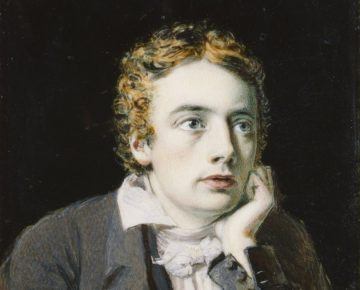
Kerschen’s depiction of the on-the-ground historical conditions that produced the Romantics’ most radical poetry—Shelley’s “Epipsychidion” and “The Masque of Anarchy,” Byron’s Don Juan—is a major achievement. But the book also offers an appealingly intimate view into Keats’s more mundane realities. The convalescent poet is forced to reckon with his debts, both financial and emotional: his life in Italy is dependent on his friends’ charity, and he is pressured to honor his engagement to Fanny Brawne, back in London. The author’s research is impeccable: the fictional Keats’s traits are all supported by what manuscript evidence tells us about the poet’s character. Even so, his choices often come as a pleasant surprise.
Continue reading
==============================
10 of the Best Poems about Deserts
via Interesting Literature
In previous poetry selections, we’ve offered some of the best poems about rivers and some of the finest sea poems. But poetry isn’t all wet; some of it is positively dry, and more than one poet has depicted the dry landscapes of deserts, wastelands, and deserted spaces. Here are ten of the greatest desert poems.
Continue reading and discover some wonderful poetry.
==============================
‘You either have a collector’s gene in you or not’: from Marmite to barbed wire, some of the weirdest collectors’ items
via ResearchBuzz Firehose: Florence Snead in inews

Mark Cranston has been collecting bricks for almost 10 years and has around 3,500 stored away in two converted stables
It starts as a hobby, then slowly takes over your whole house… Florence Snead views some of the UK’s stranger collections.
Continue reading
==============================
Spectacular, robotic cardboard sculptures
via Boing Boing by Cory Doctorow

Greg Olijnyk works as a 2D graphic designer, but his hobby is creating unbelievably wonderful 3D science fictional cardboard sculptures that sport motors and lights that animate them (some use photovoltaic cells for power, too).
Continue reading
==============================
Mosquito Hordes: How a Pesky Insect Destroyed the ‘Almost’ Invincible Mongol Empire
via Ancient Origins
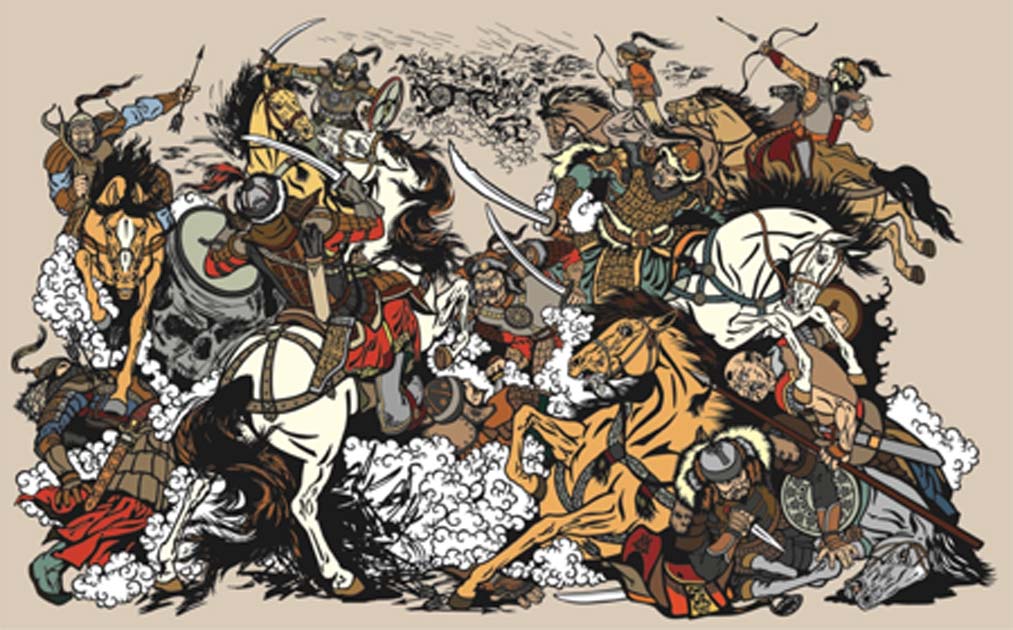
Battle between Mongols clans and tribes during the time of Genghis Khan. Source: insima / Adobe Stock.
The inhospitable, remote high steppes and grassland of the austere and windswept northern Asian plateau were occupied by warring tribal clans and duplicitous factions. Alliances were capricious, changing course as swiftly as the whims of the blustery winds. Temujin was born into this unforgiving region in 1162 and reared in a clan-based society that revolved around tribal raids, plundering, revenge, corruption, and, of course, horses.
Continue reading
Excerpted from The Mosquito by Timothy C. Winegard Copyright © 2019 by Timothy C. Winegard. Excerpted by permission of Dutton. All rights reserved. No part of this excerpt may be reproduced or reprinted without permission in writing from the publisher.
==============================
Six of the Best Poems about Phones
via Interesting Literature
Telephones, like railways, don’t offer the same scope for poetry collections as, say, flowers or forests. They simply haven’t had the ‘run up’. But in the last century or so, poets have written about phones – poems that are by turns funny, moving, thoughtful, satirical, and true. Here are six of the best phone poems.

Continue reading
I really like this image of Sylvia Plath. Unfortunately I could not find an attribution.
==============================
On Humanity And Mathematics
via 3 Quarks Daily by Jonathan Kujawa
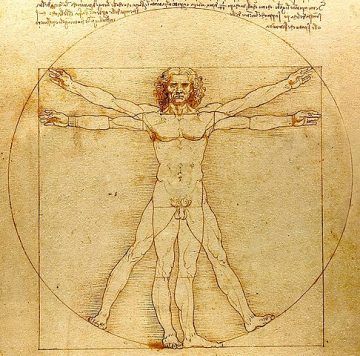
In the past few months I’ve been thinking a fair bit about math and humanity. We often think of math as outside of us but, in fact, it is a deeply human enterprise.
A group of us in the University of Oklahoma (OU) math department have been trying to establish a “bridge program” for students coming out of undergraduate but not quite ready for graduate school. In meetings with various university administrators, I’ve had to fumble my way towards an articulation of the sort of students we hope to have in the program. There are several such programs around the country with most designed to reach one or more groups that are underrepresented in mathematics. But, certainly, to have an effective program and to get administrators to open their wallets, you really need to be able to say who you’re trying to reach [1].
Continue reading
==============================
Gorgeous photos of Soviet subway stations
via Boing Boing by Clive Thompson

Christopher Herwig is a photographer who previously did a fantastic series of photos of Soviet-era bus stops.
Continue reading
==============================
The Restless Peninsula: The Proud and Colorful History of Iberia
via Ancient Origins by Aleksa Vučković

Lady of Baza, famous Iberian sculpture from a style that was developed by the Iberians of the Bronze age. Source: Juan Aunión / Adobe Stock.
Over the ages, the Iberian Peninsula was a melting pot of diverse cultures and civilizations, a piece of Europe that saw numerous migrations and many nations that rose and fell on its soil. Being the second largest peninsula in Europe, Iberia is geographically varied and vast, and as such it saw the spread of many isolated and very different cultures . And some parts of it endured with their uniqueness for a long, long time.
Continue reading
==============================
10 of the Best Poems about Disappointment
via Interesting Literature
Poets have often written about unhappiness, as well as various types of disappointment. Below we’ve gathered together ten of the finest poems about disappointment – which, we hope, won’t be disappointing to read.
Continue reading
via 3 Quarks Daily: Ardene Hegele at Public Books:
Kerschen’s depiction of the on-the-ground historical conditions that produced the Romantics’ most radical poetry—Shelley’s “Epipsychidion” and “The Masque of Anarchy,” Byron’s Don Juan—is a major achievement. But the book also offers an appealingly intimate view into Keats’s more mundane realities. The convalescent poet is forced to reckon with his debts, both financial and emotional: his life in Italy is dependent on his friends’ charity, and he is pressured to honor his engagement to Fanny Brawne, back in London. The author’s research is impeccable: the fictional Keats’s traits are all supported by what manuscript evidence tells us about the poet’s character. Even so, his choices often come as a pleasant surprise.
Continue reading
==============================
via Interesting Literature
In previous poetry selections, we’ve offered some of the best poems about rivers and some of the finest sea poems. But poetry isn’t all wet; some of it is positively dry, and more than one poet has depicted the dry landscapes of deserts, wastelands, and deserted spaces. Here are ten of the greatest desert poems.
Continue reading and discover some wonderful poetry.
==============================
via ResearchBuzz Firehose: Florence Snead in inews
Mark Cranston has been collecting bricks for almost 10 years and has around 3,500 stored away in two converted stables
It starts as a hobby, then slowly takes over your whole house… Florence Snead views some of the UK’s stranger collections.
Continue reading
==============================
via Boing Boing by Cory Doctorow
Greg Olijnyk works as a 2D graphic designer, but his hobby is creating unbelievably wonderful 3D science fictional cardboard sculptures that sport motors and lights that animate them (some use photovoltaic cells for power, too).
Continue reading
==============================
via Ancient Origins
Battle between Mongols clans and tribes during the time of Genghis Khan. Source: insima / Adobe Stock.
The inhospitable, remote high steppes and grassland of the austere and windswept northern Asian plateau were occupied by warring tribal clans and duplicitous factions. Alliances were capricious, changing course as swiftly as the whims of the blustery winds. Temujin was born into this unforgiving region in 1162 and reared in a clan-based society that revolved around tribal raids, plundering, revenge, corruption, and, of course, horses.
Continue reading
Excerpted from The Mosquito by Timothy C. Winegard Copyright © 2019 by Timothy C. Winegard. Excerpted by permission of Dutton. All rights reserved. No part of this excerpt may be reproduced or reprinted without permission in writing from the publisher.
==============================
via Interesting Literature
Telephones, like railways, don’t offer the same scope for poetry collections as, say, flowers or forests. They simply haven’t had the ‘run up’. But in the last century or so, poets have written about phones – poems that are by turns funny, moving, thoughtful, satirical, and true. Here are six of the best phone poems.
Continue reading
I really like this image of Sylvia Plath. Unfortunately I could not find an attribution.
==============================
via 3 Quarks Daily by Jonathan Kujawa
In the past few months I’ve been thinking a fair bit about math and humanity. We often think of math as outside of us but, in fact, it is a deeply human enterprise.
A group of us in the University of Oklahoma (OU) math department have been trying to establish a “bridge program” for students coming out of undergraduate but not quite ready for graduate school. In meetings with various university administrators, I’ve had to fumble my way towards an articulation of the sort of students we hope to have in the program. There are several such programs around the country with most designed to reach one or more groups that are underrepresented in mathematics. But, certainly, to have an effective program and to get administrators to open their wallets, you really need to be able to say who you’re trying to reach [1].
Continue reading
==============================
via Boing Boing by Clive Thompson
Christopher Herwig is a photographer who previously did a fantastic series of photos of Soviet-era bus stops.
Continue reading
==============================
via Ancient Origins by Aleksa Vučković
Lady of Baza, famous Iberian sculpture from a style that was developed by the Iberians of the Bronze age. Source: Juan Aunión / Adobe Stock.
Over the ages, the Iberian Peninsula was a melting pot of diverse cultures and civilizations, a piece of Europe that saw numerous migrations and many nations that rose and fell on its soil. Being the second largest peninsula in Europe, Iberia is geographically varied and vast, and as such it saw the spread of many isolated and very different cultures . And some parts of it endured with their uniqueness for a long, long time.
Continue reading
==============================
via Interesting Literature
Poets have often written about unhappiness, as well as various types of disappointment. Below we’ve gathered together ten of the finest poems about disappointment – which, we hope, won’t be disappointing to read.
Continue reading
Sunday 9 August 2020
Who are the limited users of digital systems and media? An examination of U.K. evidence
an article by Simeon J Yates andElinor Carmi (University of Liverpool, UK), Eleanor Lockley (Sheffield Hallam University, UK), Alicja Pawluczuk (United Nations University Institute in Macau) and Tom French and Stephanie Vincent (Good Things Foundation) published in First Monday Volume 25 Number 7 (July 2020)
Abstract
This paper presents findings on the correspondence of levels of digital systems and media use with a range of socio-economic and demographic measures in the U.K.
Most research on inequalities in regard to digital systems and media has focused on access and skills.
Building on prior work (Yates and Lockley, 2018; Yates, et al., 2015) we argue that inequalities in regard to digital systems and media are better understood around types of user and their correspondence to other key social variables – rather than solely individual skills and access. The analysis presented here covers a range of key demographic variables, especially those that are markers of distinct social disadvantage.
We find that those not using the Internet have distinct characteristics – predominantly around age, education and deprivation levels. We also find that those undertaking limited uses (overall limited use or a very narrow range of uses) are all predominantly from lower socio-economic status backgrounds with variations due to age and education.
The data used for the analysis is the recent U.K. Ofcom 2018–19 (n = 1,882) media literacy survey. The paper uses latent class analysis methods to inductively define user types. Multinomial and binary logistic regression are used to explore the correspondence of latent class group membership to key demographic variables.
These insights have direct U.K. and international policy relevance as they are key to the development of strategies to tackle ongoing digital inequalities in U.K. society.
Full text (HTML)
Labels:
digital_inequalities, life_stage, digital_systems,
Abstract
This paper presents findings on the correspondence of levels of digital systems and media use with a range of socio-economic and demographic measures in the U.K.
Most research on inequalities in regard to digital systems and media has focused on access and skills.
Building on prior work (Yates and Lockley, 2018; Yates, et al., 2015) we argue that inequalities in regard to digital systems and media are better understood around types of user and their correspondence to other key social variables – rather than solely individual skills and access. The analysis presented here covers a range of key demographic variables, especially those that are markers of distinct social disadvantage.
We find that those not using the Internet have distinct characteristics – predominantly around age, education and deprivation levels. We also find that those undertaking limited uses (overall limited use or a very narrow range of uses) are all predominantly from lower socio-economic status backgrounds with variations due to age and education.
The data used for the analysis is the recent U.K. Ofcom 2018–19 (n = 1,882) media literacy survey. The paper uses latent class analysis methods to inductively define user types. Multinomial and binary logistic regression are used to explore the correspondence of latent class group membership to key demographic variables.
These insights have direct U.K. and international policy relevance as they are key to the development of strategies to tackle ongoing digital inequalities in U.K. society.
Full text (HTML)
Labels:
digital_inequalities, life_stage, digital_systems,
Wednesday 5 August 2020
World war and welfare legislation in western countries
an article by Herbert Obinger and Carina Schmitt (University of Bremen, Germany) published in Journal of European Social Policy Volume 30 Issue 3 (July 2020)
Abstract
This article examines the impact of the two world wars on welfare legislation in 16 western countries.
We use Poisson regressions to test our hypothesis that war was a catalyst of welfare legislation, especially in countries that were heavily exposed to the dreadful effects of war. By welfare legislation, we mean the inaugural adoption and major reforms across four programmes (old age and disability benefits, sickness and maternity benefits, unemployment compensation and family allowances).
Our findings suggest that both world wars are key factors for explaining the timing of comprehensive welfare reforms and outweigh the significance of other factors such as regime type or level of economic development.
Labels:
social_policy, war, welfare_legislation, welfare_state,
Abstract
This article examines the impact of the two world wars on welfare legislation in 16 western countries.
We use Poisson regressions to test our hypothesis that war was a catalyst of welfare legislation, especially in countries that were heavily exposed to the dreadful effects of war. By welfare legislation, we mean the inaugural adoption and major reforms across four programmes (old age and disability benefits, sickness and maternity benefits, unemployment compensation and family allowances).
Our findings suggest that both world wars are key factors for explaining the timing of comprehensive welfare reforms and outweigh the significance of other factors such as regime type or level of economic development.
Labels:
social_policy, war, welfare_legislation, welfare_state,
Monday 3 August 2020
‘Peaceful protesters’ and ‘dangerous criminals’: the framing and reframing of anti-fracking activists in the UK
an article by Ella Muncie (University of Leicester, UK) published in Social Movement Studies Volume 19 Issue 4 (2020)
Abstract
The process of hydraulic fracturing (fracking) to produce shale gas remains controversial. Most research in this area has focused on the environmental and economic impacts, with concerns for water, soil and air pollution, seismic activity and cost effectiveness being most prevalent.
In contrast less attention has been given to the identities and experiences of a growing number of anti-fracking groups and campaigns. This research explores how grassroots activists in the UK have been framed and reframed in media, political and campaigner discourse.
Through a combination of semi structured interviews with activists at three protest sites in July 2017 and analysis of media coverage at that time in the national and local press, it explores the extent to which discretionary policing practices, conflicting media reports and fluctuating framings have impacted the movement’s ability to exercise its democratic right to protest.
Labelscriminalisation, fracking, framing, policing, protest,
Abstract
The process of hydraulic fracturing (fracking) to produce shale gas remains controversial. Most research in this area has focused on the environmental and economic impacts, with concerns for water, soil and air pollution, seismic activity and cost effectiveness being most prevalent.
In contrast less attention has been given to the identities and experiences of a growing number of anti-fracking groups and campaigns. This research explores how grassroots activists in the UK have been framed and reframed in media, political and campaigner discourse.
Through a combination of semi structured interviews with activists at three protest sites in July 2017 and analysis of media coverage at that time in the national and local press, it explores the extent to which discretionary policing practices, conflicting media reports and fluctuating framings have impacted the movement’s ability to exercise its democratic right to protest.
Labelscriminalisation, fracking, framing, policing, protest,
Friday 31 July 2020
In the name of parliamentary sovereignty: conflict between the UK Government and the courts over judicial deference in the case of prisoner voting rights
Helen Hardman
School of Social & Political Sciences, University of Glasgow, Glasgow, UK
published in British Politics Volume 15 Issue 3 (June 2020)
Abstract
New archival evidence reveals how UK governments, since the 1970s, have been concerned primarily with domestic courts encroaching on executive powers rather than those of the legislature. Alongside the Human Rights Act 1998, a mechanism of judicial ‘deference’ to Parliament evolved to justify courts deferring to an act of Parliament, or to decisions of the legislature, or executive. As this article argues, failure to clarify which of these three is at play has served as a helpful vehicle for Governments to convey the powerful narrative of courts using human rights frameworks to usurp the democratic powers of Parliament as legislature at times of conflict between the courts and the executive. In the prisoner voting debate, actors thus successfully invoked ‘parliamentary sovereignty’ to generate an emotive narrative that the European Court of Human Rights was usurping the powers of ‘Parliament’ when instead the Court, supported by the UK legal community, was challenging the dangerous precedent set by the UK Divisional Court’s deference, in 2001, to the executive. Interview data demonstrate how the 2011 backbench parliamentary debate to flout Strasbourg’s judgements was largely manufactured to curtail the ECHR mechanism which empowers domestic courts to effectively hold the government to account.
Only the abstract freely available BUT, and it's a VERY BIG BUT, Notes and References are given with it here, together with Unattributed interviews and Archival documents.
I've highlighted this to read at the British Library when I finally get there.
Labels:
prisoner_voting_rights, Parliamentary_sovereignty, European_Court_of_Human_Rights,
UK_judiciary, human_rights,
School of Social & Political Sciences, University of Glasgow, Glasgow, UK
published in British Politics Volume 15 Issue 3 (June 2020)
Abstract
New archival evidence reveals how UK governments, since the 1970s, have been concerned primarily with domestic courts encroaching on executive powers rather than those of the legislature. Alongside the Human Rights Act 1998, a mechanism of judicial ‘deference’ to Parliament evolved to justify courts deferring to an act of Parliament, or to decisions of the legislature, or executive. As this article argues, failure to clarify which of these three is at play has served as a helpful vehicle for Governments to convey the powerful narrative of courts using human rights frameworks to usurp the democratic powers of Parliament as legislature at times of conflict between the courts and the executive. In the prisoner voting debate, actors thus successfully invoked ‘parliamentary sovereignty’ to generate an emotive narrative that the European Court of Human Rights was usurping the powers of ‘Parliament’ when instead the Court, supported by the UK legal community, was challenging the dangerous precedent set by the UK Divisional Court’s deference, in 2001, to the executive. Interview data demonstrate how the 2011 backbench parliamentary debate to flout Strasbourg’s judgements was largely manufactured to curtail the ECHR mechanism which empowers domestic courts to effectively hold the government to account.
Only the abstract freely available BUT, and it's a VERY BIG BUT, Notes and References are given with it here, together with Unattributed interviews and Archival documents.
I've highlighted this to read at the British Library when I finally get there.
Labels:
prisoner_voting_rights, Parliamentary_sovereignty, European_Court_of_Human_Rights,
UK_judiciary, human_rights,
Wednesday 29 July 2020
Change point analysis of historical battle deaths
an article by Brennen T. Fagan, Marina I. Knight, Niall J. MacKay and A. Jamie Wood (University of York, UK) published in Journal of the Royal Statistical Society Statistics in Society Series A Volume 183 Issue 3 (June 2020)
Summary
It has been claimed and disputed that World War II has been followed by a ‘long peace’: an unprecedented decline of war.
We conduct a full change point analysis of well‐documented, publicly available battle deaths data sets, using new techniques that enable the robust detection of changes in the statistical properties of such heavy‐tailed data.
We first test and calibrate these techniques.
We then demonstrate the existence of changes, independent of data presentation, in the early to mid‐19th century, as the Congress of Vienna system moved towards its collapse, in the early to mid‐20th century, bracketing the World Wars, and in the late 20th century, as the world reconfigured around the end of the Cold War.
Our analysis provides a methodology for future investigations and an empirical basis for political and historical discussions.
Full text (PDF 25pp)
Labels:
battle_deaths, change_point_analysis, correlates_of_war, heavy-tailed_data, long_peace, power_law_distribution,
Hazel’s comment:
What I understood of this I found fascinating.
Summary
It has been claimed and disputed that World War II has been followed by a ‘long peace’: an unprecedented decline of war.
We conduct a full change point analysis of well‐documented, publicly available battle deaths data sets, using new techniques that enable the robust detection of changes in the statistical properties of such heavy‐tailed data.
We first test and calibrate these techniques.
We then demonstrate the existence of changes, independent of data presentation, in the early to mid‐19th century, as the Congress of Vienna system moved towards its collapse, in the early to mid‐20th century, bracketing the World Wars, and in the late 20th century, as the world reconfigured around the end of the Cold War.
Our analysis provides a methodology for future investigations and an empirical basis for political and historical discussions.
Full text (PDF 25pp)
Labels:
battle_deaths, change_point_analysis, correlates_of_war, heavy-tailed_data, long_peace, power_law_distribution,
Hazel’s comment:
What I understood of this I found fascinating.
Subscribe to:
Posts (Atom)

